
What Makes a Trauma Center Not Feasible?
Yesterday's post highlighted the key considerations when evaluating the feasibility of a new trauma center. Today we take the opposite lens: what makes a trauma center unfeasible?
There are more than 2300 trauma centers in the United States (all levels) and they play a critical role in saving lives during emergencies. But when a hospital wants to consider adding a trauma program to their hospital, there are several things to consider.
The reality is trauma care is expensive and many hospitals struggle to maintain high-quality trauma care. The challenges often boil down to three main factors: market volume, high trauma readiness costs, and payor mix. Understanding these challenges helps explain why it is essential to conduct a thorough analysis before launching a trauma program and some of the main reasons that an analysis might show such an endeavor to be unfeasible.
Market Volume and Its Impact on Trauma Center Feasibility

Trauma centers require a steady flow of patients to justify their operation. The volume of trauma cases in a given area directly affects whether a trauma center can sustain itself. Low patient volume creates several problems:
Underutilized Resources
Trauma centers must keep specialized staff and equipment ready 24/7. When patient numbers are low, these resources sit idle, leading to wasted costs.
Difficulty in Maintaining Staff Skills
Trauma care demands highly trained professionals who need regular exposure to complex cases to maintain their skills. Low volume limits this exposure, potentially affecting care quality. In addition, many specialties must be on call 24/7; they are paid for call regardless of whether a patient comes through the door.
Inability to Meet Volume Thresholds
Only American College of Surgeon (ACS) verified Level I trauma centers have a minimum volume requirement (1200 admissions per year or 240 patients with a high injury severity score). However, just because other levels do not have mandatory minimum volumes does not mean that volume is not important. Low volume can be an indication of several things:
The trauma center is located in a rural area without a lot of trauma incidents
The trauma needs of a community may already be met by other trauma centers
Patients in a trauma service area are bypassing your hospital and getting care at another facility
The Implications of High Trauma Readiness Costs Are Not Just Financial

The cost of operating a trauma center goes beyond typical hospital care due to the need for specialized equipment, staff, and infrastructure. These trauma readiness costs have been explained in another post. In addition to the monetary toll, trauma readiness costs have other implications
Inability to Provide Specialized Staffing
Communities cannot make certain specialties magically appear. A more remote city may not have a panel of ophthalmologists or plastic surgeons waiting to take call. And even if those specialists are in town, they may not want to take trauma call because it interferes with their private practices. These professionals command higher salaries due to their expertise and rarity, but sometimes money alone cannot solve coverage issues.
Advanced Equipment and Technology
Trauma care depends on imaging machines, surgical equipment, advanced facility capabilities, and high-end monitoring devices that must be available at all times and proximal to patient care areas. Having a MRI machine or the backup CT scanner across campus does not position your hospital for trauma care. Relocating equipment or purchasing new equipment is extremely expensive and sometimes impossible.
Burnout Cannot Be Fixed with Money
Burnout among our healthcare workers is real and prevalent. And there is a threshold where money alone will not solve the problem. At a certain point, physicians are unwilling or unable to continue to take call, perform trauma program administrative duties, and participate in PIPS and other trauma program activities, regardless of the amount of the call stipend. This is especially the case in trauma centers with a small panel of trauma surgeons who are also responsible for emergency general surgery call.
Poor Payor Mix Causes Trauma Programs to Bleed Cash
A poor payor mix makes trauma centers financially difficult to sustain because the cost of delivering trauma care is extremely high while reimbursement is often low or nonexistent. Safety-net hospitals, which disproportionately serve uninsured and underinsured patients, face an even greater burden because many trauma cases involve individuals without private insurance or with coverage that reimburses below cost, such as Medicaid.
Without a sufficient share of privately insured patients (who typically reimburse at higher rates), hospitals struggle to offset these losses. As a result, the imbalance between high operating expenses and inadequate reimbursement makes it financially unfeasible for many hospitals to establish or maintain trauma centers, particularly in communities with large uninsured populations.
Recent Examples of Trauma Center Closures Due to Lack of Feasibility
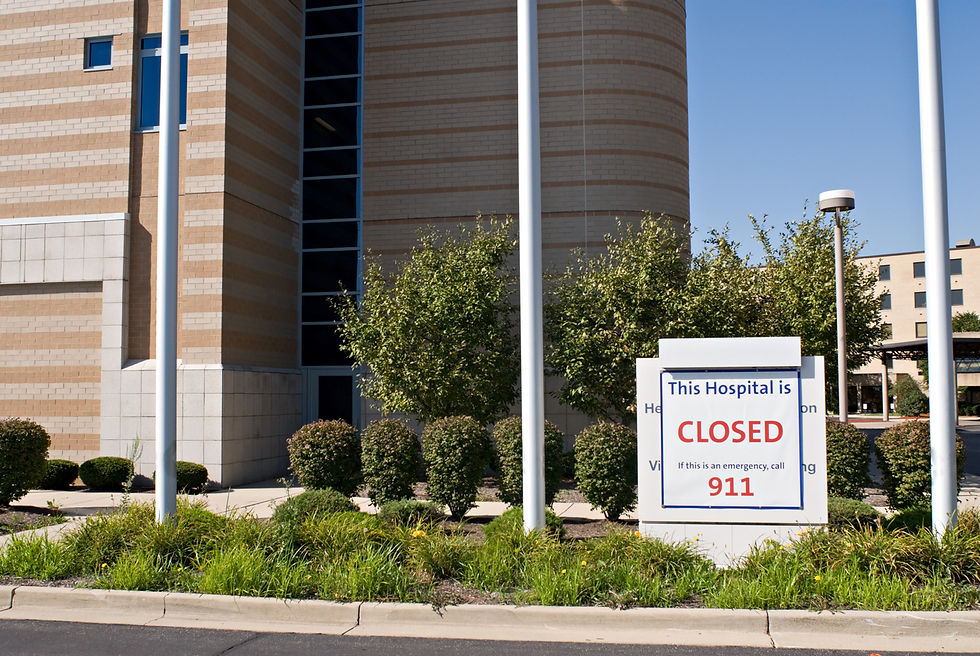
In the last five years, several hospitals have closed or downgraded their trauma centers (or been on the verge of doing so). Financial pressure, staffing issues, and inadequate trauma volumes are the main reasons for these closures. Here are a few examples:
Central Maine Medical Center (Lewiston, Maine) voluntarily ended its Level III trauma center designation at the end of 2025, citing high costs of maintaining verification. Source
Morris Hospital & Healthcare Centers (Morris, Illinois) voluntarily ended Level II trauma center designation in 2025, specifically citing the inability to provide neurosurgery coverage. Source
Mercy Medical Center (Aurora, Illinois) lost its Level II trauma center designation in 2025 due to declining trauma volumes, trauma surgeon staffing shortages, and inability to sustain required staffing and services. Source
In 2024, Regional Medical Center (San Jose, California) announced it would close its Level II trauma center, citing high operating costs, low reimbursement rates, and physician shortages. The announcement was met with intense community backlash and grave concerns about the burden it would create for the remaining trauma center (Santa Clara Valley Medical Center, Level I trauma center) in a community of 1.9 million people. The hospital did change course and was purchased by Santa Clara County; 7 months later trauma services were restored at a Level III level. Source
The Wellstar Health System closed the Atlanta Medical Center and its Level I trauma center in 2022, citing unsustainable operational costs. This has caused major strain on the remaining trauma centers in the Atlanta area. Source
These examples highlight the real-world impact of financial and operational challenges on trauma center viability.
Bottom Line
Trauma centers face significant hurdles in staying operational due to the interplay of market volume, high expenses, and the need for constant readiness. Low patient volume reduces revenue and staff experience, while high fixed costs strain budgets. Maintaining 24/7 readiness adds further complexity and expense.
Understanding these challenges upfront is crucial for hospitals who are considering adding a new trauma program or upgrading the level of an existing program.


