
Trauma Survivor Story: Garrett Ebling
On August 1, 2007, during evening rush hour, a section of the Interstate 35W bridge collapsed. The bridge spanned 1900 feet across the banks of the Mississippi River near downtown Minneapolis. There were 111 vehicles on the bridge at the time of the collapse, and Garrett Ebling (then age 32) was in one of them. His red Ford Focus plunged 110 feet and landed on debris from the bridge, only the top few inches of the car above the water.
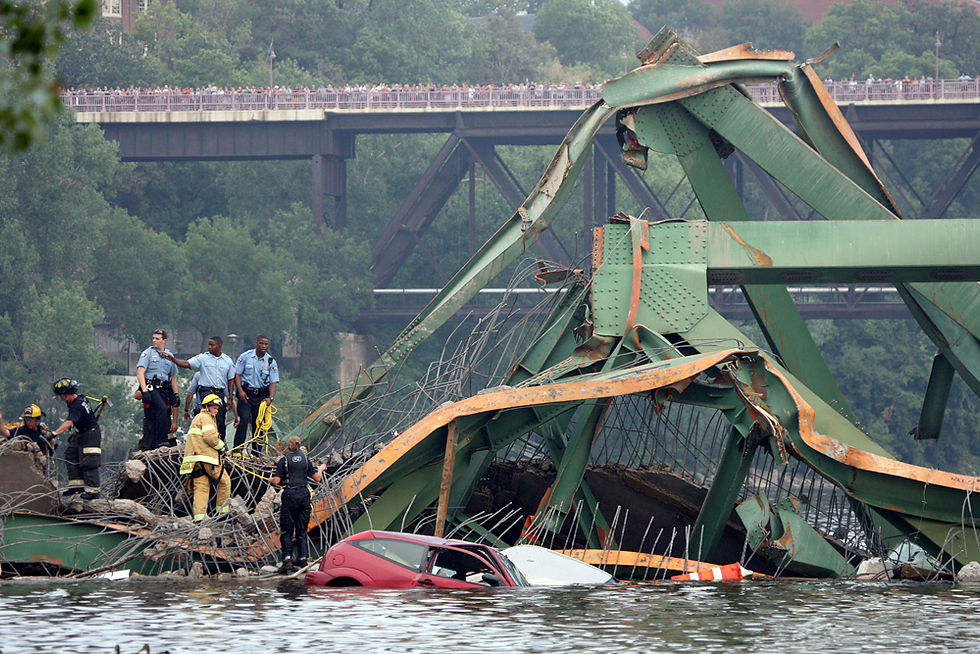
Garrett suffered life-threatening injuries, including a traumatic brain injury, fractured facial bones, a collapsed lung, a broken vertebra, two broken ankles, a fractured diaphragm, and a severed colon. He spent 18 days in a medically-induced coma at Hennepin County Medical Center (HCMC) before transitioning to the Knapp Rehabilitation Center.
Trauma System Response

HCMC is a Level I Adult / Level I Pediatric Trauma Center. It was approximately one mile from the scene and received all critically injured patients transported by EMS. Although the hospital was near bed capacity at the time of the collapse, they mobilized quickly and received 25 patients in two hours.
Dr. Chad Richardson was one of the trauma surgeons who cared for bridge patients that day, including Garrett. He was not the trauma attending surgeon on service that day, nor was he the backup surgeon, but he raced from home to the hospital as soon as he heard the news. He spoke with me about his memories of the events in those initial hours.
"Early on we didn't know how many people were coming," Dr. Richardson explained. "So we got the most critically injured patients to surgery quickly to stabilize them and perform life-saving interventions, then moved them to the ICU in order to free up the ORs. Nearly every patient returned to the OR the next day for more definitive treatment."
The Long Road to Recovery
It has been 19 years since the bridge fell, but not a day goes by that Garrett does not think about it. Not necessarily the event itself, but he constantly relives the feeling of being in control one minute and completely lacking control the next. He is easily triggered by an event or small occurrence that doesn't go as planned and he has to be intentional to not allow his anger to cloud his reactions.
In the weeks and months following the accident, Garrett's focus was solely on physical recovery. "I was given diagnoses and timelines and exercises, a step-by-step guide to recovery," he explained. "But no one talked about the mental aspect of recovery. I appreciated the empathy of the staff but felt ill-equipped for the emotional recovery that would follow discharge."
Garrett assumed that once his physical wounds healed, the mental healing would follow.
"Someone told me that if I went to physical therapy and did the work, I would feel well in six months. So I went to therapy and focused on the six-month mark, but that only distracted me from the real work. When that six-month mark arrived, I was frustrated and felt like I had just wasted time."
Lessons Learned at HCMC
Dr. Richardson is currently the Trauma Medical Director at HCMC. He acknowledged that the trauma community at large has learned a lot about mass casualty events and disaster planning since that day in 2007. HCMC has also had many opportunities to activate their disaster management plan since then, with one of the most recent events being in response to the school shooting at Annunciation Catholic Church in August 2025.
But the trauma community, led by the American College of Surgeons, has also learned more about post-traumatic stress and the importance of treating the mental and emotional pain, not just the physical injuries.
"We are better at addressing post-traumatic stress now," Dr. Richardson reflected. "At HCMC we have trauma psychologists who see the patient during their hospitalization. Outpatient trauma-informed care is built into the discharge process. We have a Trauma Survivor Network to support and share information with people who survived traumatic injury. I wish we would have had more of those resources in place back then to care for Garrett and other bridge survivors."
Trauma Survivorship
Garrett struggled for years to find a way to heal and frame his experience. He tried to soldier on by throwing himself into work. He got married and then divorced. He changed careers. He got engaged but then that relationship fell apart, too.
"Trauma survivors often act in ways that injure and scare those around them," he wrote on his blog in 2024. "We don’t want to act this way. It leaves us feeling guilt-ridden, shameful, and out of control. Left unmanaged, this post-trauma behavior can and does poison relationships as it eats the trauma survivor from within."
Garrett reports that about seven years ago he hit a low point and had to ask himself what he was not willing to lose. "And the answer was 'my son,'" Garrett shared. "I drew a line and started to do the real work to heal. I found a structure that allowed me to frame the problem and see the solution. For the first time I started to feel hopeful about the future."

Garrett has also worked hard to reframe his story. He wrote a book about the collapse and his early recovery, speaks publicly about his experience, and is in the process of self-publishing a new book on trauma recovery. Due to the public nature of his traumatic event, he has had visibility that gives him the platform to connect with others. He said that people are drawn to him because they understand the shared experience of trauma.
"Healing is a process," Garrett shared. "The first step is understanding what trauma is and how it affects you. Understanding trauma first and then learning how to manage your triggers is no quick fix. However, it’s mandatory if you ever want to get back to truly living again."
Garrett lives with his wife, two dogs, three cats, and a bunch of chickens in a small town in rural Minnesota and shares custody of his teenage son with his first wife. He has a bachelor's degree in newspaper journalism and currently works as a Global Communications Manager for Purpose Brands, a wellness and fitness service headquartered in Woodbury, Minnesota.


